Buy or lease? The Florida business owner's guide to owning your building in 2026

Rent is the only bill that gives itself a raise every year. This month, the fixed-rate loan built for business owners dropped back to 6.58%. Florida has scrapped its tax on commercial rent, and voters just capped how fast property taxes can grow. Here's the honest math on owning your building, including the cases where you shouldn't.
By Renan Serretiello and Christopher Taddei, founding partners of The List, Orlando, Florida. Part 9 of the Florida CRE series. Loan rates as of the November 5, 2026 debenture sale.
The 60-second answers
- Is it cheaper to buy or to lease? In our Orlando example, the owner writes about $116,000 more in checks over 10 years and ends with a building. With every cost counted, owning comes out about $301,000 ahead. The tenant ends with a renewal letter.
- How much cash does it take? Typically 10% down with an SBA 504 loan, plus closing costs. Newer businesses and special purpose buildings need 15% to 20%.
- What's the rate? About 6.58% fixed for 25 years on the SBA portion as of November. Expect a blended rate of roughly 7% to 8% once the bank's half is included.
- Do I have to fill the whole building? No. You need to occupy 51% of an existing building. A tenant can rent the rest and help pay your loan.
- What's the catch? The owners personally guarantee the loan, the SBA portion carries a prepayment penalty for the first ten years, and your purchase resets the property tax bill. In our example, leaving before year six makes leasing the cheaper choice.
- What did Florida change? The sales tax on commercial rent ended in October 2025, which made leasing cheaper. Amendment 3 caps non-school tax growth at 5% a year from 2027, which rewards long-term owners.
- When is leasing the better call? When you'll move or change size within about six years, when you doubt the building will hold its value, or when your cash earns more inside the business than it would in a building.
Run the buy vs. lease calculator · Get a comparison for your space · See when leasing wins · Jump to the investor section
If you run a business out of leased space, you know the envelope. It arrives about six months before your lease ends, it contains a number your landlord picked, and you read it in the parking lot doing the same math every tenant does: how many years have I paid for this building, and how much of it do I own?
The answer to the second question is zero, and the quiet fear is that it always will be. The earlier parts of this series were written for investors. This one is for the people who pay them. It uses real November 2026 numbers for Central Florida, and it's honest about the times when signing another lease is the smarter move. A lease, after all, is a subscription to a building. Subscriptions are great until you add up ten years of them.
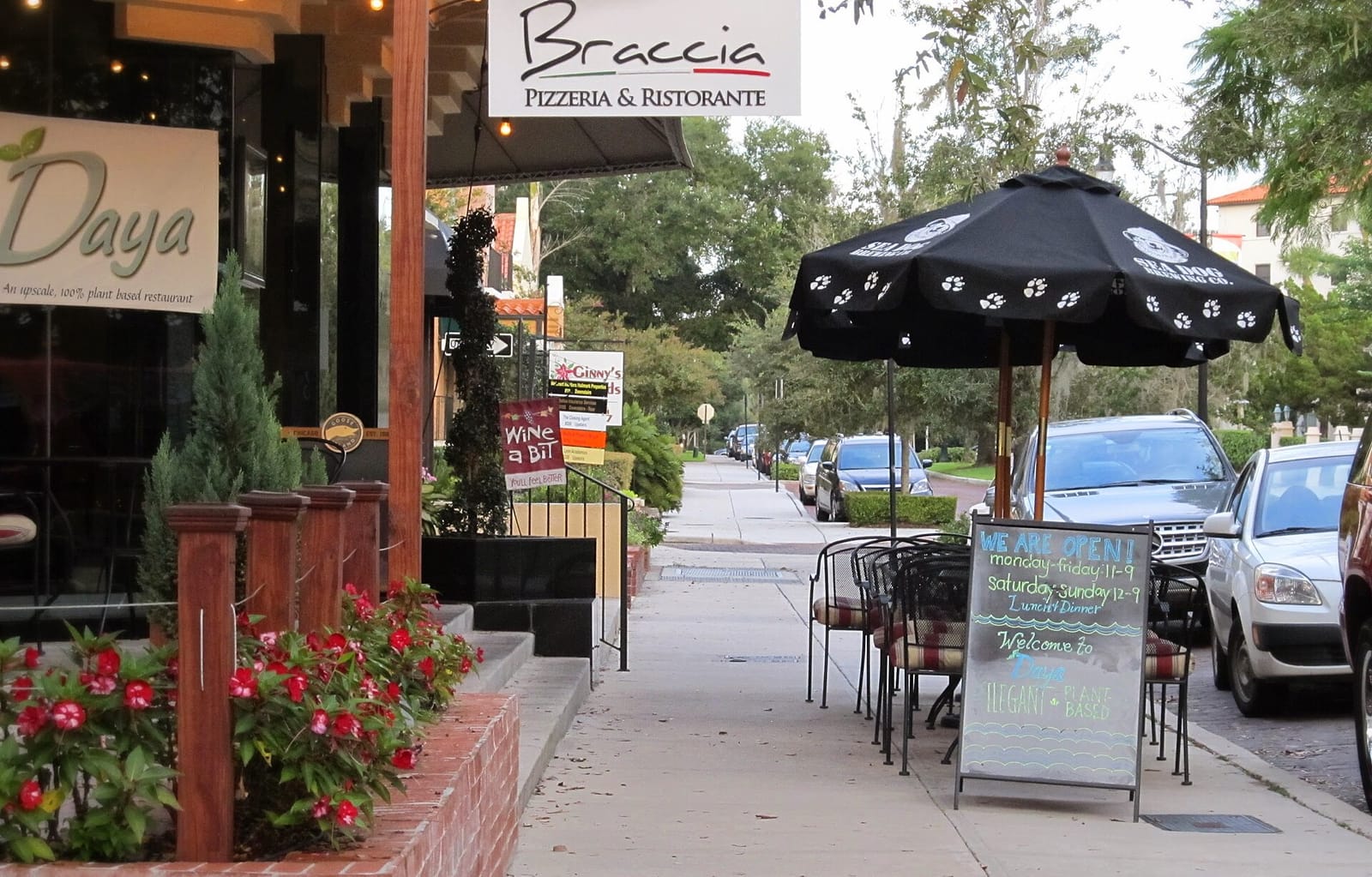
Small-business space on Park Avenue in Winter Park. Photo: Miosotis Jade, CC BY-SA 4.0, via Wikimedia Commons.

The payment and the rent
Short answer: in year one, owning costs more per month than renting. In our example rent catches the loan payment in year nine, and the gap widens every year after.
Take a 10,000 square foot industrial building in metro Orlando. Matthews, using CoStar data, puts the average sale price at a record $182 per square foot, [1] and Newmark puts average asking rent at $11.38 per square foot on a triple net basis, where the tenant also pays taxes, insurance and maintenance. [2] We picked that rent on purpose: it sits almost exactly at the average of the five brokerage reports in Figure 4, and against a $182 price it implies a yield of about 6.25%.
| Lease it | Buy it | |
|---|---|---|
| Price or rent | $11.38 per sq. ft. a year, rising 3% a year | $1,820,000 ($182 per sq. ft.) |
| Cash up front | Usually a security deposit | $182,000 down (10%), plus about $54,600 in closing costs |
| Monthly cost, year 1 | $9,483 in rent | $11,840 loan payment |
| Monthly cost, year 10 | $12,374 in rent | $11,840 loan payment |
| Property tax | You pay the landlord's bill, often a capped one | Your purchase resets it: about $4,900 a year more here |
| Insurance and upkeep | You pay them (triple net) | You pay them, plus the roof and structure |
Illustrative. Assumes a $1,638,000 loan at a 7.25% blended rate over 25 years, 3% annual rent increases and 3% closing costs. Market averages blend large and small buildings; small buildings usually cost more per foot to buy and to rent. Sources for price and rent: Matthews; Newmark. [1] [2]
Figure 1. Your rent gets a raise every year. A fixed payment never does (annual rent versus annual loan payment, 10,000 sq. ft. Orlando building, $ thousands)
Our analysis. Illustrative, using the assumptions in the table above. Shows rent and loan payments only. The ten-year comparison below adds the buyer's cash, property tax reset and loan penalty.
In year one the owner pays about $28,275 more than the tenant. That's the price of admission, and it's why so many business owners stop the math here. Keep going. Rent passes the loan payment in year nine, and by year fifteen the tenant is paying about $30,000 a year more than the owner, for the same building.
Ten years later
Golden nugget #1: ten years of owning costs about $116,000 more in checks than ten years of leasing. Then the owner keeps the building.
In this example the tenant pays $1,304,589 in rent. The owner makes $1,420,749 in loan payments. The difference is $116,160. One of those people owns a building at the end. The owner has paid the loan down by about $341,000. If the building is worth 2% more each year, selling it in year ten leaves roughly $855,000 after paying off the loan and a 3% selling cost. If it never gains a dollar of value, the sale still leaves about $468,000.
Now the honest part, because the checks aren't the whole cost. Owning has three costs a tenant never sees, and most buy versus lease math leaves them out:
- Your own tax reset. Buying resets the property's assessment to market value, so your tax bill is higher than the capped one a long-time landlord was passing through. [3] In this example, about $4,900 a year. [4]
- The cost of your cash. The $236,600 you put in could have earned something elsewhere. At 5% a year, roughly what a 10-year Treasury has paid this fall, [5] that's about $149,000 over ten years.
- The loan's prepayment penalty. SBA 504 loans charge one for the first ten years. [6] By year ten it's small, about $3,200 here. In the early years it's large.
Count all of it, and owning still comes out about $301,000 ahead after ten years. That result leans on the building gaining value. If it never gains a dollar, leasing wins by about $85,000. The break-even is appreciation of roughly half a percent a year. So the case for buying doesn't rest on the monthly checks. It rests on staying put, and on the building holding its value.
Figure 2. With every cost counted, owning comes out about $301,000 ahead after ten years (ten-year net cost, 10,000 sq. ft. Orlando building, $ thousands)
| Choice | Ten-year net cost |
|---|---|
| Lease for 10 years (rent paid; you own nothing) | $1,304,589 |
| Buy, then sell in year 10 (every owner cost, less what the sale leaves you) | $1,003,275 |
Our analysis. Owning = down payment + closing costs + ten years of loan payments + the added property tax + what the cash could have earned at 5% + the prepayment penalty, less sale proceeds in year ten (2% annual appreciation, 3% selling cost, loan paid off). Excludes insurance and maintenance, which both sides pay, the owner's roof and structural repairs, and income tax effects.
Your landlord has a retirement plan. In a long lease, it's you.
The 10% down loan, in plain English
Short answer: the SBA 504 program lets a business buy its own building with about 10% down and a fixed rate for up to 25 years, with no balloon payment.
The 504 is the rare government program that's better than its name. It splits the purchase three ways: [7] [8]
- A bank lends about 50% as a regular first mortgage, at a rate the bank sets.
- A Certified Development Company lends up to 40% through an SBA-backed bond called a debenture, at a fixed rate. Terms run 10, 20 or 25 years. [9]
- You put in at least 10%. If the business has operated for two years or less, or the building is a limited or single purpose property, it's 15%. If both, 20%. [10]
The SBA's piece tops out at $5 million to $5.5 million depending on the project. The business must operate for profit and meet the SBA's size standards, and the loan can't pay for working capital, inventory or investment rental property. [9] The loan is fully amortized, so there's no balloon to refinance in year five or ten. [8]
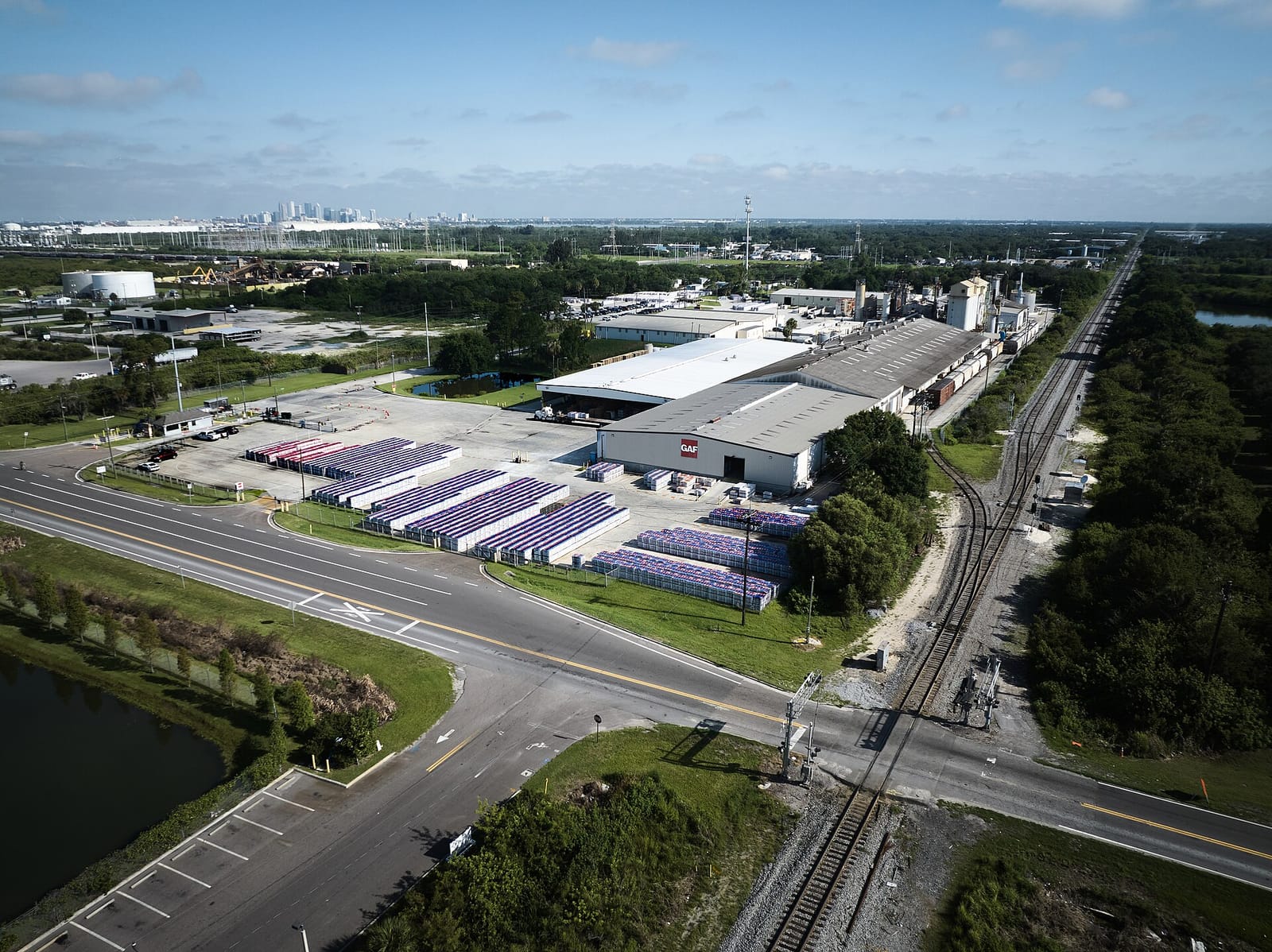
An owner-occupied manufacturing plant in Tampa. Photo: Porcinipal, CC0, via Wikimedia Commons.

Golden nugget #2: you only have to use 51% of the building
For an existing building, your business must occupy at least 51% of the rentable space, which means you can lease up to 49% to someone else. [\[11\]](https://www.ecfr.gov/current/title-13/section-120.131) Buy 10,000 square feet, use 5,500, and rent 4,500 at $11.38 a foot, and a tenant covers about $51,200 of your $142,075 annual payment. You've become the person who sends the renewal letter. New construction is stricter: you must occupy at least 60% at the start, may lease up to 20% long term, and must plan to grow into the rest within ten years. [\[11\]](https://www.ecfr.gov/current/title-13/section-120.131) Most owners hold the building in a separate company that leases it to the operating business. The SBA allows that and calls the property company an "eligible passive company." The rules are specific: the rent can cover only the loan payment and the costs of holding the property, the lease must run at least as long as the loan, and the operating business has to guarantee or co-sign it. [\[12\]](https://www.ecfr.gov/current/title-13/section-120.111) Your attorney and CPA should set it up.
What the loan asks of you
**A personal guarantee.** Anyone who owns 20% or more of the business generally has to guarantee the loan personally. [\[13\]](https://www.ecfr.gov/current/title-13/section-120.160) The building is the collateral, and so are you. **A penalty for leaving early.** On a 20- or 25-year 504 loan, paying off the SBA portion in the first ten years triggers a prepayment penalty. It starts at about a year's interest on the remaining balance and drops by a tenth each year, reaching zero in year eleven. [\[6\]](https://pursuitlending.com/resources/sba-prepayment-penalty/) On our example that's roughly $30,500 if you sell in year three and $22,000 in year five. The bank's half has its own terms, so ask about both. Two details worth knowing: you can't pay the SBA portion down in pieces, and if your buyer assumes the loan when you sell, you may avoid the penalty. [\[6\]](https://pursuitlending.com/resources/sba-prepayment-penalty/) **Fees.** The SBA puts the program's fees at approximately 3% of the debt and says they may be financed with the loan. [\[9\]](https://www.sba.gov/loans/504-loans) The 3% closing cost line in our example is a rough stand-in for every purchase cost. Ask your lender for a full estimate.
The rate you don't get to pick
Short answer: the SBA portion's rate isn't set when you apply. It's set when your debenture is sold to investors, and in 2026 that monthly rate has swung by more than a full point.
Figure 3. Same loan, same year, rates from 5.72% to 6.98% (SBA 504 25-year fixed effective rate by monthly debenture sale, 2026, %)
Real data. Effective rates include fees and vary slightly by Certified Development Company. Source: CMDC historical SBA 504 rate table; November pricing completed November 5, 2026. [14] [15]
The 504 rate is pegged to the 10-year Treasury, [9] and each month's debenture sale sets a rate that then never changes for that month's loans. [8] The rate is locked in at funding, not when you sign a contract. [8] This year that has mattered a lot: 5.72% in March, 6.98% in October, and back down to about 6.58% at the November 5 sale. [14] [7]
On the $728,000 SBA portion of our example, the difference between the March rate and the October rate is about $570 a month, or roughly $171,000 over 25 years. Nobody can time the bond market, and you shouldn't try. But you should ask your lender which month's sale your loan is likely to land in, and remember that only the SBA's 40% is fixed for the full term. The bank's 50% is priced separately, which is why one lender puts the typical blended rate at 7.0% to 8.0% right now. [7] We used 7.25% in the example.
Manufacturers and rural businesses get a discount
For manufacturers, certain food supply chain businesses and projects in rural areas, the November 25-year rate was about 6.34%, roughly a quarter point lower, because the SBA is waiving its upfront and annual fees for those borrowers this fiscal year. [\[15\]](https://somercor.com/november-2026-sba-504-interest-rates/) If that's you, ask your lender to confirm you qualify.
What Florida changed, for both sides of the decision
Short answer: one Florida change made leasing cheaper, one made long-term owning cheaper, and a third thing has always been true but almost no tenant knows it.
- The rent tax is gone. Florida repealed its sales tax on commercial rent effective October 1, 2025. The rate had been 2%. [16] Tenants used to pay it on every rent check and owners didn't, so its repeal took away one of the old arguments for buying. If your lease still bills it, call your landlord.
- Property tax growth is capped lower. Voters approved Amendment 3 on November 3. From 2027, the assessed value of commercial property can rise no more than 5% a year for non-school taxes, down from 10%. [17] [18] An owner who holds for a long time keeps that protection for as long as they own.
- Insurance got cheaper. Florida property insurance costs have fallen sharply since early 2025; for apartments, the median premium per unit dropped about 40% between early 2025 and April 2026. [19] Get a current quote before you compare owning and leasing, as we covered in part five.
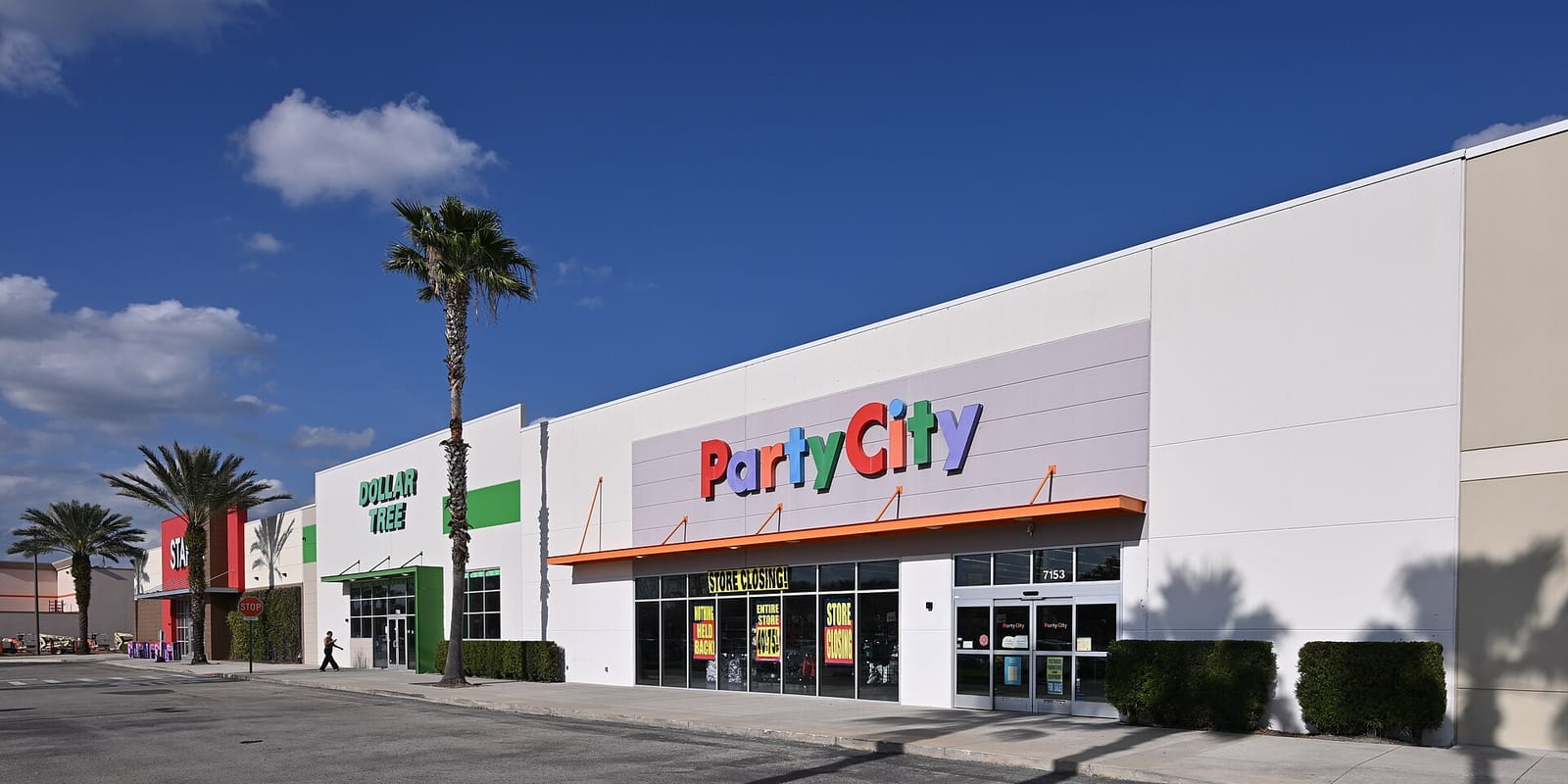
Retail tenants at Vista Palms on Narcoossee Road in Orlando, photographed in February 2025. Photo: G. Edward Johnson, CC BY 4.0, via Wikimedia Commons.

Golden nugget #3: when your landlord sells the building, your costs can jump, even though your lease didn't change
In Florida, a sale resets a commercial property's assessment to full market value on the following January 1. [\[3\]](https://www.leg.state.fl.us/Statutes/index.cfm?App_mode=Display_Statute&URL=0100-0199%2F0193%2FSections%2F0193.1555.html) In a triple net lease, the tenant pays the property taxes. So when your landlord cashes out, the tax bill that lands on you is the new owner's, not the old one's. Here's the size of it. Say your building sells for $1,820,000, and the long-time owner's capped assessment for non-school taxes was $1,100,000. After the reset, that assessment could be about $1,547,000. At Orange County's 2025 average non-school rate of 10.961 mills, that's roughly $4,900 more a year, about 49 cents per square foot, for the same space. [\[4\]](https://countypropertytaxes.com/florida/orange-county/) And a 5% cap makes the gap between a long-time owner's assessment and market value grow wider over time, so future resets get bigger. If you're signing or renewing a lease, ask for a clause that keeps tax increases caused by a sale of the building out of your pass-throughs. If you own, this problem is yours to control: the cap is yours for as long as you hold. Buyers aren't exempt, though. Your own purchase resets the assessment, which is why our ten-year math charges the owner for it. [Part four](https://thelistorlando.com/blog/florida-commercial-property-taxes-guide-2026/#reset) explains the reset in full.
Which rent is real?
Short answer: the "market rent" you're quoted depends on whose report is on the table.
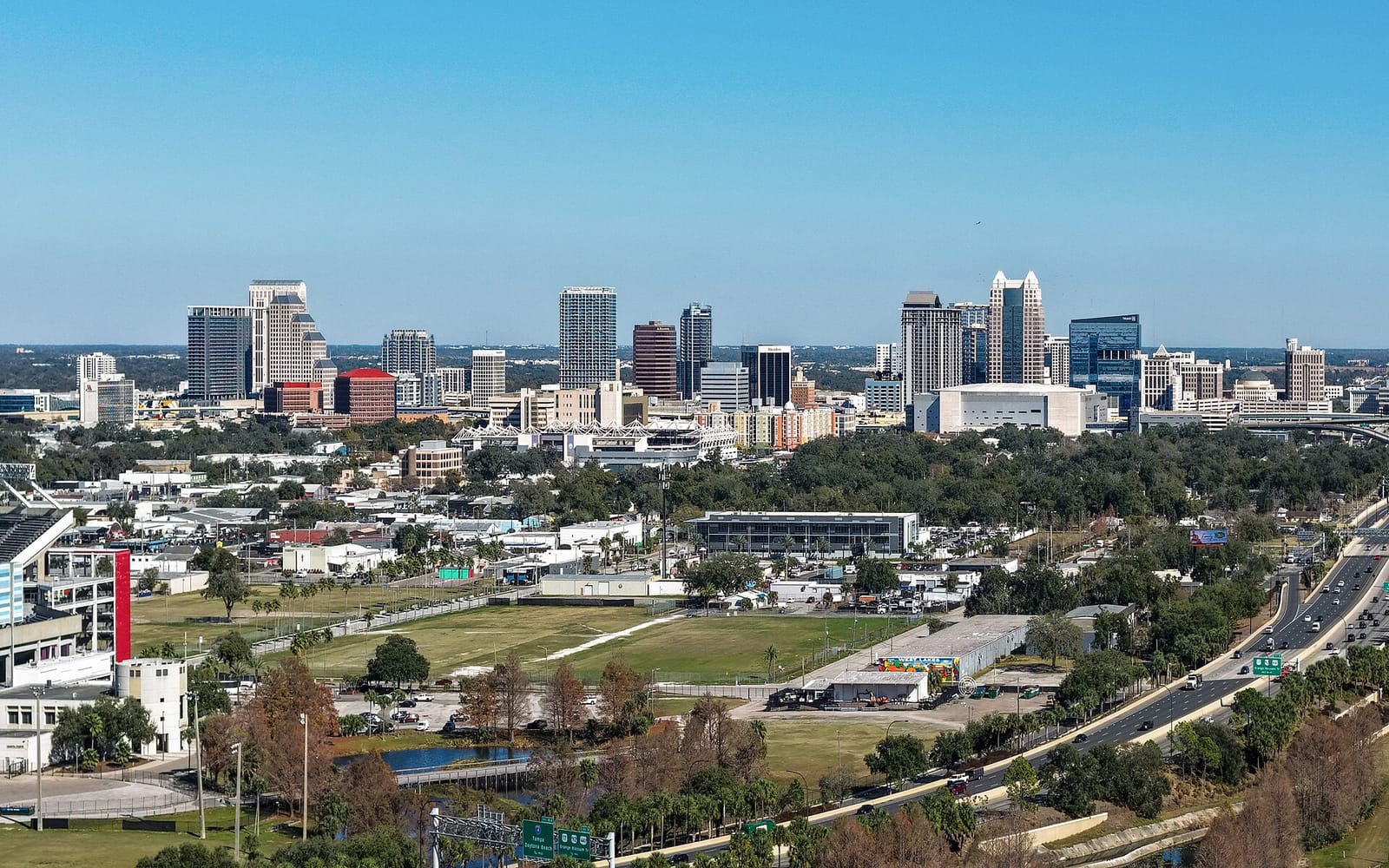
Downtown Orlando. Photo: Quintin Soloviev, CC BY 4.0, via Wikimedia Commons.

Figure 4. Five reports, one market, a 50% spread
Orlando industrial average asking rent per square foot per year, third quarter 2026.
| Source | Average asking rent |
|---|---|
| Cushman & Wakefield | $9.88 |
| CBRE | $10.48 |
| Blackline | $10.61 |
| Newmark (used in our example) | $11.38 |
| Matthews (CoStar) | $14.78 |
Real data. Each firm measures a different set of buildings and lease types, which is why the averages differ. Sources: Cushman & Wakefield; CBRE; Blackline; Newmark; Matthews. [20] [21] [22] [2] [1]
In the third quarter, published average asking rents for Orlando industrial space ranged from $9.88 to $14.78 per square foot. [20] [1] On 10,000 square feet, that's a $49,000 a year difference in what "market" means. The five reports average $11.43, which is why our example uses Newmark's $11.38. It's the same lesson this series found for office, retail and apartments: averages depend on what's being counted. In a renewal negotiation, ask which report the number came from, then ask for comparable leases signed in your submarket in the last six months. That's the only number that matters.
Location swings it too. Vacancy in Lake Mary and Sanford is about 3.0%, while the Airport and Lake Nona area is about 12.1%. [23] A tenant in the second market has leverage. A tenant in the first has a good reason to look at buying.
Run it for your own business
Buy vs. lease calculator
Start from one of three Central Florida examples, then replace every number with yours.
- Cash needed to buy
- $236,600
- Monthly loan payment
- $11,840
- Monthly rent today
- $9,483
- Owning comes out ahead by
- $301,314
Rent passes your loan payment in year 9. With every cost counted, owning pulls ahead if you stay 6 years or more. Over 10 years you'd pay $1,304,589 in rent or $1,420,749 in loan payments.
Owning comes out ahead by $301,314. Rent passes your loan payment in year 9. With every cost counted, owning pulls ahead if you stay 6 years or more. Over 10 years you'd pay $1,304,589 in rent or $1,420,749 in loan payments.
Illustrative only. 25-year loan and 3% selling cost. Counts the cost of your cash, the added property tax and an estimated SBA prepayment penalty in the first ten years, using a 5.5% debenture rate on the SBA share of the loan. Excludes insurance and maintenance, which both sides pay in a triple net lease, the owner's roof and structural repairs, and income tax effects. The retail and medical office examples start from Matthews' third-quarter average asking rents, $31.17 and $36.60 a foot, and price the building at each sector's average cap rate, 6.68% and 7.3%. That works out to about $467 and $501 a foot. Reported average sale prices are lower, $303 and $384, because they include older buildings that rent for less, and the medical report doesn't say whether its rent is net of expenses. Loan rates reflect the November 5, 2026 sale. Not financial advice. Sources: Statewide CDC; Matthews Orlando retail and Central Florida healthcare reports, Q3 2026.
When leasing is the better call
A guide that only argues for buying is a sales pitch. Here's when we tell clients to keep leasing.
- You'll be gone in under six years. With the cost of your cash, the tax reset and the loan's prepayment penalty counted, owning in our example is about $80,000 behind leasing after three years and only pulls ahead in year six. Under six years, lease.
- You doubt the building will hold its value. Our example needs only about half a percent of appreciation a year to break even over ten years. With none, leasing wins by about $85,000. Buy where you'd be comfortable owning for a long time.
- Your space needs are changing fast. If you might double or halve your footprint, a building is an anchor. A lease with expansion and termination options is a tool.
- Your cash earns more in the business. The down payment and closing costs in the example are $236,600, and our math charges 5% a year for that cash. If it returns 25% a year in inventory, trucks or people, the calculator will tell you to keep leasing. Try it.
- You don't want to be a landlord to yourself. Owners replace roofs, repave lots and carry the building if the business moves or shrinks. Budget for it, or don't buy.
- The right building isn't for sale. Location beats ownership. Don't buy the wrong building because the loan is attractive.
- Everything you own would be in one place. Owning your building ties your business and your biggest asset to the same local economy. Some owners want that. Some shouldn't.
Figure 5. Leave before year six and leasing was the cheaper choice (owning's advantage over leasing by how long you stay, $ thousands; below zero, leasing costs less)
| Years you stay | Owning's advantage over leasing |
|---|---|
| 1 | -$134,237 |
| 2 | -$109,972 |
| 3 | -$80,237 |
| 4 | -$44,810 |
| 5 | -$3,457 |
| 6 | $44,070 |
| 7 | $98,030 |
| 8 | $158,696 |
| 9 | $226,356 |
| 10 | $301,314 |
Our analysis. Illustrative, using the calculator's default assumptions. Below zero, leasing costs less. The early years are weighed down by closing and selling costs and by the SBA prepayment penalty, which is about $39,000 in year one and $22,000 in year five.
How buying actually works
- Run the numbers first. Use the calculator with real quotes for rent and price in your submarket, and be honest about how long you'll stay.
- Talk to a lender before you shop. A bank and a Certified Development Company can tell you what you qualify for, how much cash you'll need and which rules apply to your business. Ask about the personal guarantee and both prepayment penalties while you're there.
- Find the building. Buildings sized for owner-users are scarce in tight submarkets, so start looking well before your lease ends.
- Rebuild the cost lines during due diligence. Get an insurance quote, an inspection of the roof and systems, an environmental report, and the property tax bill you'll owe after the reset, not the seller's.
- Close with the bank loan. Budget for Florida's taxes on the note and mortgage. Our closing cost table in part three lists them.
- The debenture sells and your rate is set. The SBA portion funds at that month's sale, and the rate is fixed from then on. [8]
For step four, our free tax line worksheet rebuilds the post-sale property tax bill and our insurance renewal checklist covers the quote. One more thing for your CPA: owners can depreciate the building, and with 100% bonus depreciation permanently restored, a cost segregation study may speed up deductions on parts of it. [5]
For investors: what owner-users mean for your deals
Business owners who buy their own buildings change the market for everyone else. Five things to know.
1. Owner-users don't buy on cap rate
An investor asks what a building yields. An owner-user asks whether the payment beats the rent. That's a different price, and it's often a higher one. Orlando industrial prices hit a record $182 per square foot in the third quarter, up for 16 straight years, even as vacancy rose to about 9.5%. [1] In small buildings, you're often bidding against someone who isn't doing your math.
2. Your tenant has a cheaper alternative than you think
A tenant paying 3% more every year can compare that with a 25-year fixed payment. In part seven we showed that investors face negative leverage when loans cost more than cap rates. Owner-users don't care about that, because they're replacing rent, not chasing yield. At renewal, longer terms, smaller increases and improvement allowances are cheaper than an empty building.
3. Check your leases for tax reset protection before you buy
If a tenant negotiated the clause in golden nugget #3, the tax increase your purchase triggers is yours, not theirs. Read every lease's tax pass-through language and model the reset both ways.
4. Owner-users are a source of sale-leaseback deals
A business that owns its building can sell it to an investor and lease it back, turning real estate into growth capital. With borrowing costs high, it's a conversation worth having. For an investor, that's a long lease with a tenant who already knows the building.
5. Small buildings in tight submarkets are the prize
Northeast Orange County's industrial vacancy is 4.9% and Lake Mary and Sanford's is about 3.0%, against a metro average near 9%. [1] [23] Those are the submarkets where owner-users and investors compete hardest, and where the inland growth we tracked in part two keeps adding demand.
The bottom line
For a stable business that will stay put, owning usually wins on the math, and Florida's new tax cap makes it win by more over time. For a business that's still changing shape, a well-negotiated lease is worth every dollar. Either way, the worst decision is the one made in the parking lot with a renewal letter in your hand. Run the numbers six to twelve months before your lease ends. Browse current [listings](https://thelistorlando.com/listings/), or [tell us about your space](https://thelistorlando.com/contact/#start) and we'll run both sides with you.
The Florida CRE series
- Florida commercial real estate, fall 2026: what the numbers actually say
- Follow the rooftops: Florida's inland markets
- Florida's CRE debt reckoning: where the distress is, and isn't
- Florida commercial property taxes, explained
- Florida commercial property insurance in 2026
- Florida Opportunity Zones 2.0
- Florida retail and net lease in 2026
- Florida apartments in 2026
- Buy or lease? The Florida business owner's guide (you're here)
Frequently asked questions
Is it better to buy or lease commercial property in Florida?
It depends mostly on how long you will stay. In an illustrative 10,000 square foot Orlando example at late 2026 prices and loan rates, the owner pays about $116,000 more than the tenant over 10 years, in loan payments versus rent, but ends with equity in a building and comes out about $301,000 ahead once every cost and a sale are counted. Buying generally favors businesses that will stay six years or more and have stable space needs. Leasing favors short horizons, fast-changing space needs and businesses that earn more by keeping capital in operations.
How much do I need to put down to buy a commercial building for my business?
With an SBA 504 loan, typically 10% of the project cost. Businesses that have operated two years or less, or that are buying a limited or single purpose property, contribute 15%, and 20% if both apply. A bank lends about 50% and a Certified Development Company lends up to 40% through an SBA-backed debenture.
What is the SBA 504 loan rate in November 2026?
The 25-year fixed effective rate on the SBA portion was about 6.57% to 6.58% at the November 5, 2026 debenture sale, down from about 6.98% in October. In 2026 the monthly rate ranged from about 5.72% in March to 6.98% in October. The bank portion is priced separately, and one lender estimates a typical blended rate of 7.0% to 8.0%.
Do I have to occupy the whole building with an SBA 504 loan?
No. Your business must occupy at least 51% of an existing building, so you may lease out up to 49%. For new construction you must occupy at least 60% at the start, may lease up to 20% long term, and must plan to occupy the rest within ten years.
Does Florida still charge sales tax on commercial rent?
No. Florida repealed its sales tax on commercial rent effective October 1, 2025. That lowered the cost of leasing and removed one of the old cost advantages of owning.
How does Amendment 3 affect a business that owns its building?
Starting in 2027, the assessed value of non-homestead property, including commercial buildings, can rise no more than 5% a year for non-school taxes, down from 10%. An owner who holds for many years keeps that protection. The assessment resets to market value when the property is sold.
Can my rent go up if my landlord sells the building?
Your base rent usually cannot, but your total occupancy cost can. In a triple net lease the tenant pays the property taxes, and in Florida a sale resets the assessment to market value the following January 1. Unless the lease limits it, that higher tax bill is passed through to the tenant.
Does an SBA 504 loan have a prepayment penalty?
Yes. On 20- and 25-year SBA 504 loans, prepaying the SBA portion during the first ten years triggers a penalty. It starts at about one year of interest on the remaining balance and declines by one tenth each year, reaching zero in year eleven. The bank's first mortgage has its own prepayment terms.
Do I have to personally guarantee an SBA 504 loan?
Generally, yes. Under SBA rules, holders of at least a 20% ownership interest in the business generally must personally guarantee the loan, and the SBA or lender can require other guarantees.
When does leasing make more sense than buying?
When you expect to move or change size within about six years, when your business earns a higher return on capital than a building would, when the right building is not for sale, or when you do not want the responsibility for the roof, structure and vacancies.
This guide is for general information and education. It is not financial, tax, legal or lending advice, and The List is not acting as your lender, financial advisor, attorney or tax advisor. Loan rates, program rules and market conditions change, and eligibility depends on your business. SBA 504 rates are effective rates published by Certified Development Companies and vary slightly by lender. The buy versus lease example, Figures 1, 2 and 5, the tax reset example and the calculator are our own illustrative calculations and combine market averages from different sources. Talk to an SBA lender, a CPA and a Florida real estate attorney before you decide.
Lease ending in the next 12 months?
Send us your current rent, your square footage and how long you plan to stay. We'll run the buy side and the lease side for your submarket, and tell you which one the numbers favor.